
Veneers in Reston, Virginia
A veneer is a very thin ceramic shell, usually between a quarter and half a millimetre thick, bonded to the front surface of a tooth. Because it covers only the part of the tooth that shows when you smile, a veneer can change the shape, colour and proportion of a tooth without the sort of work a crown involves. In most cases the tooth stays alive and the nerve is left alone.
Veneers sit at the heart of cosmetic dentistry, and they are one of the few treatments that can address several concerns at once.
What Veneers Can Correct
Chips and small cracks in the front teeth.
Discolouration that has not responded to whitening, including staining from the inside of the tooth.
Gaps between the front teeth, whether a wide midline gap or smaller spaces further along the arch.
Teeth that are worn down, uneven in length, or slightly irregular in shape.
Teeth that are a little out of line, in cases where the movement needed is small.
Veneers are not the answer to everything. A tooth that is badly broken down, heavily decayed or affected by gum disease needs that dealt with first, and sometimes a crown or another restoration is the better piece of work. If your teeth are significantly out of position, orthodontic treatment will usually give a healthier and longer-lasting result than covering the problem.
Types of Veneers We Offer
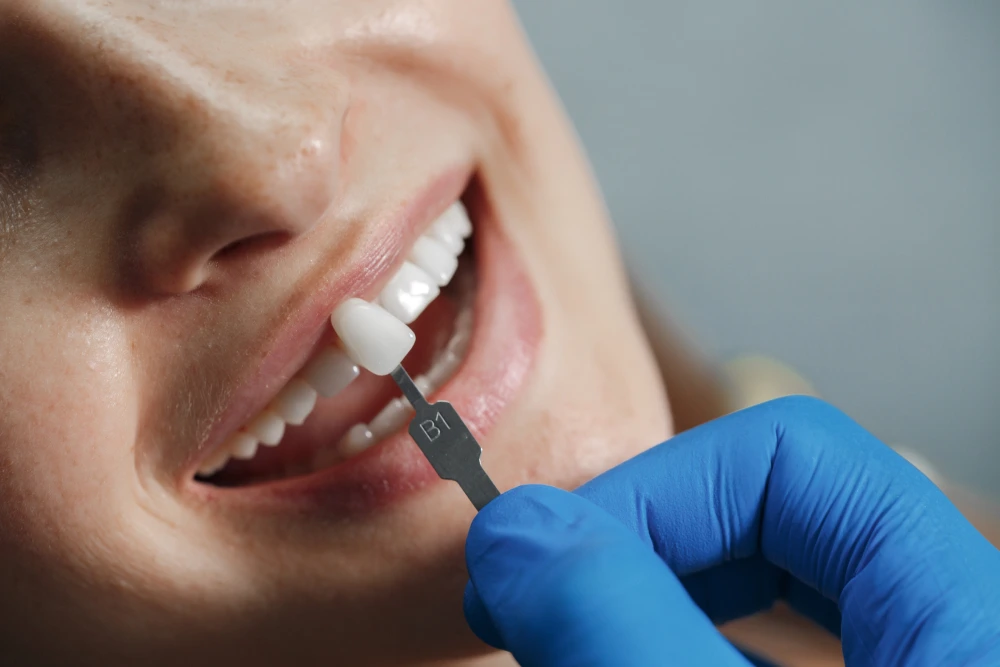
We work exclusively in ceramic. Porcelain behaves optically much like natural enamel, which is why a well-made veneer is difficult to pick out even close up, and it holds its colour rather than picking up stain from coffee or wine over the years.
Layered Feldspathic Porcelain
These veneers are built and shaded by hand, layer by layer, then fired at high temperature. The technique gives a ceramist the most control over subtle colour variation within a single tooth, the kind of gradation you see in natural enamel between the neck and the edge. It also allows for a very thin veneer where the tooth surface leaves little room. This is the option to consider when the result has to stand up to close inspection.
Pressed Ceramic
Pressed lithium disilicate veneers are formed from solid ceramic blocks and then finished and shaded by hand. They are stronger than layered porcelain and hold up particularly well to daily function, which makes them a sensible choice for patients who put more load on their front teeth. There is a stage during fabrication where shade and shape can be checked and adjusted before anything is bonded.
Minimal-Prep and No-Prep Veneers
Some very thin veneers can be bonded with little or no reduction of the tooth surface. They suit patients whose teeth are already well positioned and who want to correct shape rather than colour, since a very thin shell will not mask a dark tooth underneath. Whether your teeth are suitable for this approach is something an examination will settle.
Which of these suits you depends on your teeth, the effect you are after, and how much of the tooth surface is involved. That is a conversation to have with the dentist rather than a decision to make in advance.
What Happens During Treatment
Consultation and planning.
We examine your teeth and gums, take photographs, and talk through what you would like to change. This is also where we tell you honestly if veneers are the wrong tool for what you have in mind.
Preparing the teeth.
A small amount of enamel is usually reduced so the veneer sits flush against the neighbouring teeth and looks natural rather than bulky. How much depends on the type of veneer and the condition of the tooth.
The laboratory stage.
We take an impression or digital scan and send it to the ceramist along with detailed shade information and photographs. You wear temporary veneers while the work is made.
Fitting and bonding.
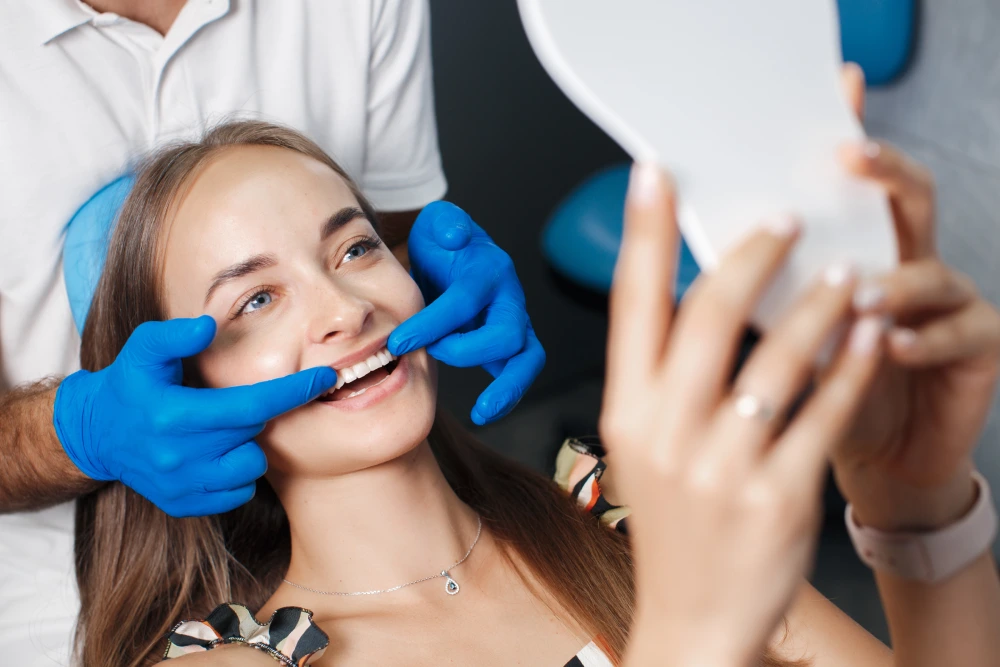
We try the veneers in first so you can see them in your own mouth and in natural light before anything is permanent. Once you are happy, they are bonded and the bite is checked and adjusted.
A Note on Snap-On Veneers
Removable snap-on veneers sold online are a cosmetic appliance rather than a dental treatment, and it is worth being clear about the difference. They clip over the existing teeth, which means the teeth underneath, along with any decay or gum problems, stay exactly as they were and become harder to clean. Worn regularly, a poorly fitting appliance can irritate the gums and put uneven load on the teeth. If what appeals is the idea of a quick change, come and talk to us anyway. Professional whitening and careful reshaping of a worn or uneven edge can get closer to what people actually want than they expect, and both leave your own teeth intact.
Caring for Your Veneers
Veneers are looked after much like natural teeth, with a few sensible habits on top.
Brush twice daily with a soft brush and a non-abrasive toothpaste. Heavily abrasive whitening pastes will dull the surface polish over time and do nothing for the colour.
Floss normally. The margin where the veneer meets the tooth is where problems start, and it is cleaned the same way as any other contact.
Keep your teeth away from things they were never meant to do, such as opening packaging, biting nails or crunching ice. Porcelain is strong under normal chewing and less forgiving of a sharp impact.
If you grind your teeth at night, tell us. A night guard protects the work, and grinding is the most common reason a veneer fails early.
Keep up your six-month checks and cleanings. We check the margins and the bite at every visit, and a hygienist will use instruments and polishing pastes appropriate for ceramic surfaces.
With reasonable care, porcelain veneers commonly serve ten to fifteen years, and often longer.
What Shapes the Cost
Veneer treatment is priced per tooth, and the total depends on how many teeth are involved, which ceramic technique your case calls for, and whether anything needs attention before the cosmetic work begins.
The number of teeth is usually the biggest factor. Some patients want a single chipped front tooth corrected, others want the whole smile line treated so the result is even across all the teeth that show.
The technique matters. Hand-layered porcelain takes a ceramist considerably longer than a pressed restoration, and that time is reflected in the laboratory fee.
The condition of the teeth matters too. Decay, an old failing filling or gum inflammation is treated first, because a veneer bonded over an unhealthy tooth will not last.
After the consultation you receive a written treatment plan with an itemised estimate, so you know the figure before you decide. Cosmetic treatment is not usually covered by dental insurance, though any preparatory work often is, and we will tell you which parts of your plan fall into which category. Financing options are available, and veneer treatment is generally an eligible HSA and FSA expense.
Frequently Asked Questions
How much do veneers cost in Reston, VA?
Do veneers damage the teeth underneath?
Is the procedure painful?
Will my veneers look obviously fake?
Can I whiten my veneers later?
No. Ceramic does not respond to whitening agents. If you are thinking about whitening your natural teeth, do it before the veneers are made so the shade can be matched to the result you want to keep.
What happens if a veneer chips or comes off?
A veneer that debonds can often be re-bonded, and one that fractures is remade. Keep the piece if you have it and call us as soon as you can, since an exposed prepared tooth can become sensitive.
Are there alternatives to veneers?
Often, yes. Professional whitening, minor reshaping of the enamel edge, or orthodontic treatment can each be the better answer depending on what is bothering you. We would rather point you toward the smaller treatment when it will do the job.




